
UNFI Investor Day Charts a Clear Path to Shared Value
December 10, 2025 6 minute read

At UNFI’s 2025 Investor Day on December 10, senior leaders provided more detail on the company's multiyear strategy and operational plan aimed at delivering shared, profitable growth for customers, suppliers, associates, and shareholders.
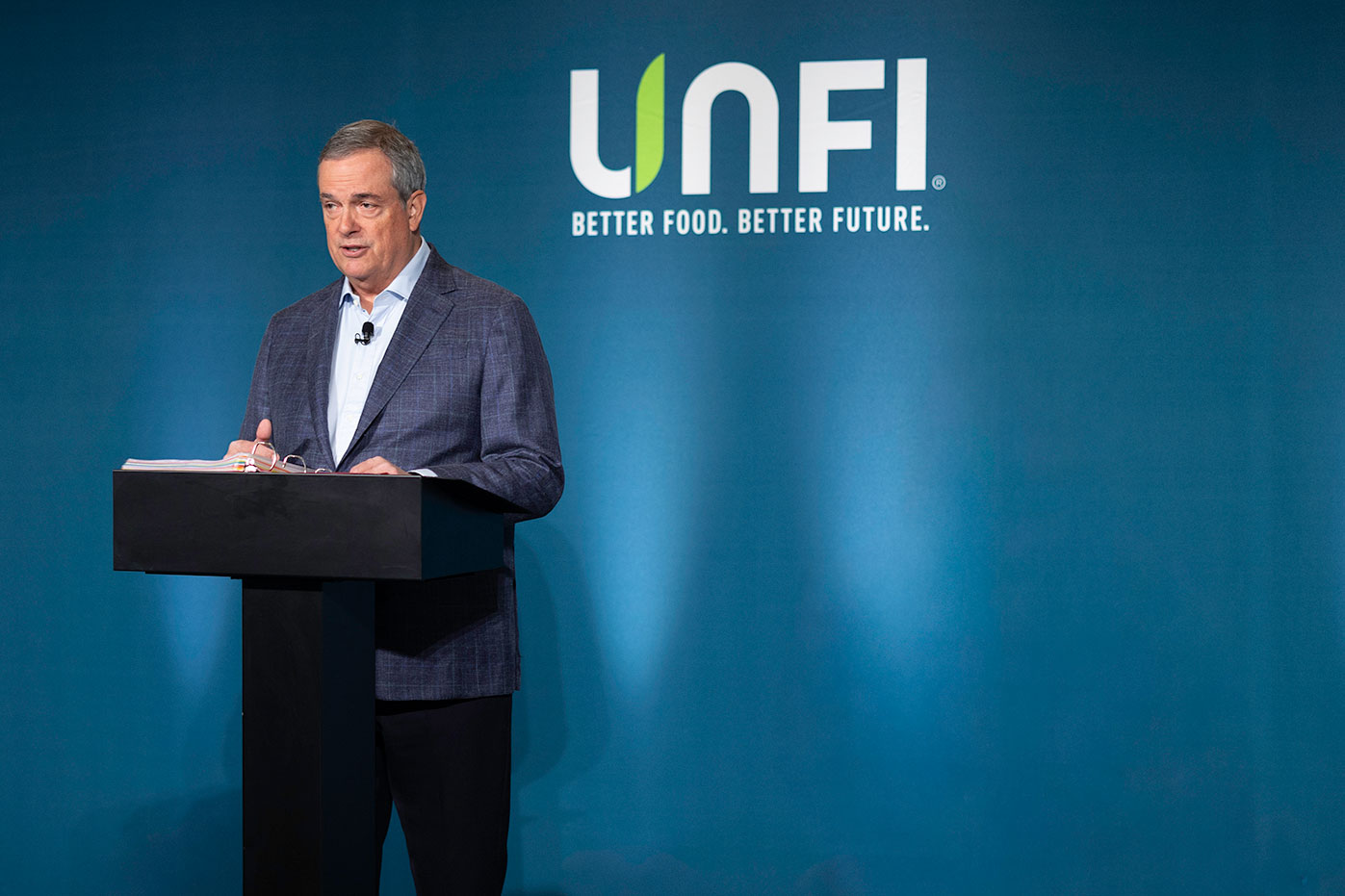
“Last year, we introduced a refreshed purpose, destination, and multiyear strategy that the entire organization is now executing with increasing excellence every day,” said Sandy Douglas, CEO. “Now, we’re accelerating a new era of growth rooted in what we do well today and what we can do even better tomorrow.”
UNFI’s multiyear strategy is focused on adding value for customers and suppliers within a growing, $90 billion target market, while improving effectiveness and efficiency across the company. Each of these components has multiple benefits – including better service to customers and suppliers, reduced operating costs, and strong returns for shareholders. The goal is to create a win-win dynamic where customers and suppliers generate higher profits, and UNFI does too.
New Financial Targets Through Fiscal 2028
Building on strong execution of its strategy to date, UNFI introduced new financial commitments from fiscal 2025 through 2028. These include low single digit average annual growth for net sales, low double-digit average annual growth for adjusted EBITDA, and approximately $300 million in annual free cash flow.
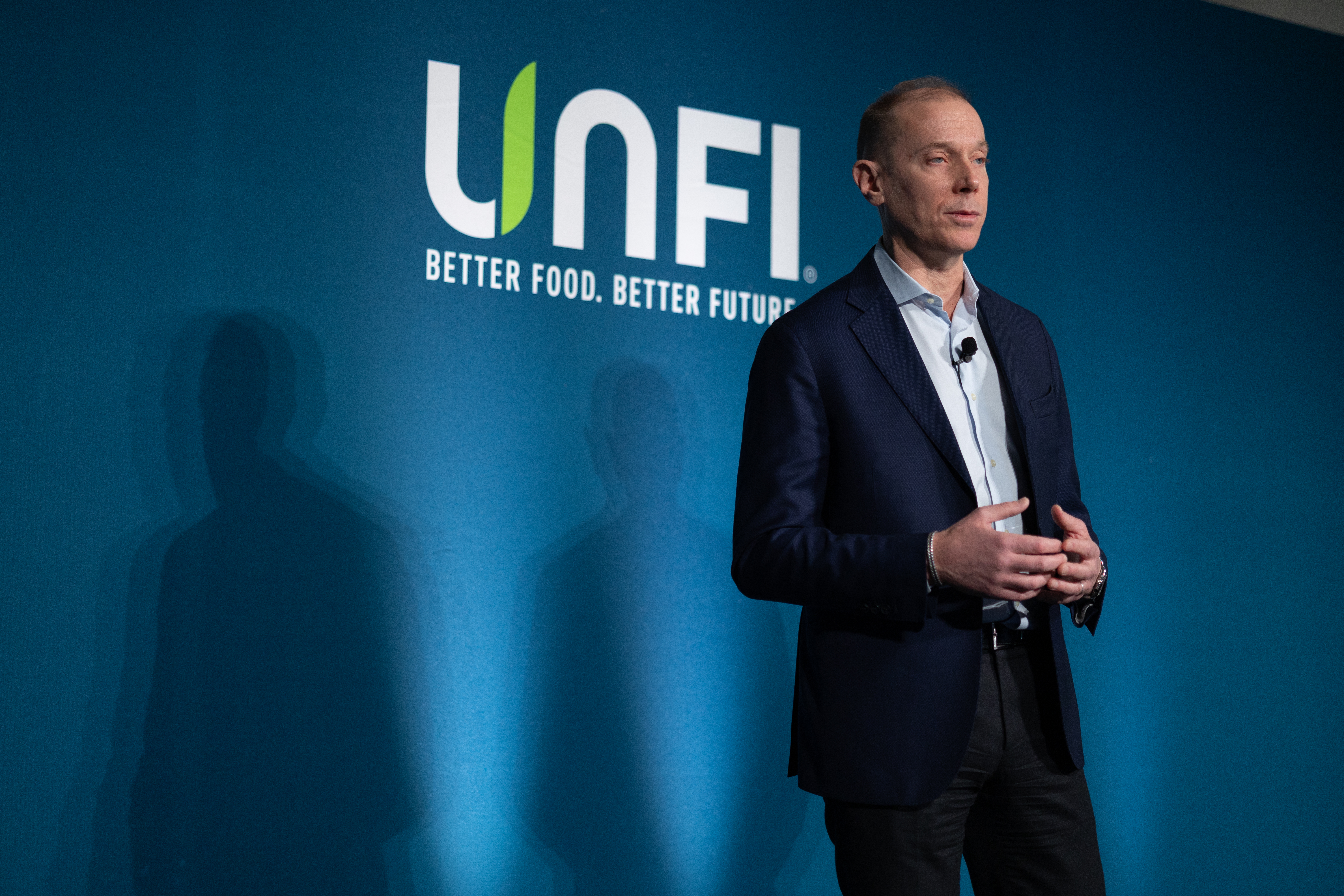
“These targets reflect a high-confidence plan with multiple levers within our control to achieve our objectives, positioning UNFI for long-term value creation well beyond fiscal 2028,” said President and Chief Financial Officer, Matteo Tarditi.
Building Capabilities for Shared, Profitable Growth
Looking ahead, the company sees significant opportunity to create more value for its stakeholders. During Investor Day, UNFI leaders detailed key capabilities that aim to help customers, suppliers, and the company grow profitably.
1) Customer Stewardship: UNFI is revamping its commercial organization to better understand each customer’s unique strategy and provide tailored product and service recommendations that fit their needs.
2) Merchandising & Supplier Support: UNFI is strengthening its merchandising capabilities with a focus on bringing its customers competitive pricing on key value items and innovative product assortments that help them better differentiate themselves from mass and discount retailers.
“In today’s grocery landscape, where consumer habits are evolving faster than ever, standing out is everything,” said Louis Martin, President, Conventional Grocery Products and Chief Commercial Officer. Our role is to help our partners do exactly that—through competitive pricing, unique assortments, and innovative merchandising programs that create real differentiation.”

Simultaneously, UNFI is working to simplify and improve the supplier experience—aiming to help innovative and emerging brands scale faster across the company’s diverse retailer network.
3) Professional & Digital Services: UNFI is focused on growing its Professional and Digital Services to help customers save money, operate efficiently and build shopper loyalty. With many customers using an average of two to three services today, versus six for top users, the company sees significant opportunity for deeper adoption across its customer base.
The company expects digital services like the UNFI Media Network to continue to play an important role in helping customers more effectively compete with large, scaled retailers in an increasingly digital marketplace.
4) Private Brands: UNFI offers a wide range of private brands at various price points designed to complement retailers’ assortments. With private brands making up more than 20% of grocery sales today, UNFI sees potential to expand brands in both the natural and conventional product categories.
5) Technology & Innovation: “At UNFI, our technology strategy is designed to enable better business outcomes,” said Mario Maffie, Chief Financial Officer. “We’re investing in platforms that simplify operations, unlock real-time insights, and help our customers meet the digital challenges they face.”
For example, the company recently implemented Relex across 50% of its distribution network, which uses AI and automation to improve customer fill rates while reducing inventory days on hand and improving free cash flow. The company is also using Samsara’s Connected Operations platform to improve driver safety and capture real-time insights into on-time delivery rates for customers.
6) Next Generation Supply Chain: “Our supply chain is the engine that drives our strategy,” said, Mark Bushway, UNFI’s President of Natural, Organic Specialty, & Fresh Products and Chief Supply Chain Officer. “Every improvement strengthens service reliability for our partners while lowering costs and supporting long-term margin goals.”

Over the past two years, UNFI has improved fill rates, on-time deliveries, and throughput, while significantly reducing shrink. To further strengthen effectiveness and efficiency, the company has implemented Lean Daily Management in 34 distribution centers to date.
Looking ahead, UNFI is focused on creating the “distribution center of the future” by combining the power of people, processes, and technology to strengthen service levels and drive operational excellence.
7) Productivity: The company is reducing SG&A, eliminating waste, and advancing strategic transformation initiatives through its Value Delivery Office. This work has driven many efficiencies so far, and the company sees even more runway in the years to come.
UNFI Team Leading The Way
UNFI leaders described the company’s team of associates as its number one differentiator.
Chief Human Resources Officer Danielle Benedict said, “Our team is our number-one reason to believe that UNFI’s future is bright. Together, we’re developing the talent and the capabilities to become our industry’s most valued partner.”
With a clear roadmap, accelerating capabilities, and a talented team driving execution, UNFI is well positioned to create lasting value for customers, suppliers, and shareholders.
For more details on UNFI’s Investor Day read the event press release.
Watch the highlights from Investor Day below:
Safe Harbor Statement under the Private Securities Litigation Reform Act of 1995: Statements in this press release regarding the Company’s business that are not historical facts are “forward-looking statements” that involve risks and uncertainties and are based on current expectations and management estimates; actual results may differ materially. The risks and uncertainties which could impact these statements are described in the Company’s filings under the Securities Exchange Act of 1934, as amended, including under the section entitled “Risk Factors” in the Company’s annual report on Form 10-K for the year ended August 2, 2025 filed with the Securities and Exchange Commission (the “SEC”) on October 1, 2025 and other filings the Company makes with the SEC, and include, but are not limited to, our dependence on principal customers; the relatively low margins of our business, which are sensitive to inflationary and deflationary pressures and intense competition, including as a result of the continuing consolidation of retailers and the growth of consumer choices for grocery and consumable purchases; our ability to realize the anticipated benefits of our strategic initiatives; changes in relationships with our suppliers; our ability to develop, implement, operate and maintain, and rely on third parties to operate and maintain, reliable and secure technology systems, and the effectiveness of the Company’s business continuity plans in response to an incident impacting the Company’s technology systems, such as the unauthorized incident on its technology systems; labor and other workforce shortages and challenges; the addition or loss of significant customers or material changes to our relationships with these customers; our ability to realize anticipated benefits of strategic transactions; our ability to continue to grow sales, including of our higher margin natural and organic foods and non-food products; our ability to maintain sufficient volume in our Natural and Conventional businesses to support our operating infrastructure; our ability to access additional capital; increases in healthcare, pension and other costs under our single employer benefit plan and multiemployer benefit plans; the potential for additional asset impairment charges; our sensitivity to general economic conditions including inflation, tariff policy and changes in disposable income levels and consumer purchasing habits; our ability to timely and successfully deploy our warehouse management system throughout our distribution centers and our transportation management system across the Company and to achieve efficiencies and cost savings from these efforts; the potential for disruptions in our supply chain or our distribution capabilities from circumstances beyond our control, including due to lack of long-term contracts, severe weather, labor shortages or work stoppages or otherwise; the effect of adverse decisions in, or settlement of, litigation or other proceedings to which we are subject; moderated supplier promotional activity, including decreased forward buying opportunities; union-organizing activities that could cause labor relations difficulties and increased costs; changes in tax laws and regulations, and actions by federal, state and local taxing authorities related to the interpretation and application of such tax laws and regulations; our ability to maintain food quality and safety; and volatility in fuel costs. Any forward-looking statements are made pursuant to the Private Securities Litigation Reform Act of 1995 and, as such, speak only as of the date made. The Company is not undertaking to update any information in the foregoing reports until the effective date of its future reports required by applicable laws. Any estimates of future results of operations are based on a number of assumptions, many of which are outside the Company’s control and should not be construed in any manner as a guarantee that such results will in fact occur. These estimates are subject to change and could differ materially from final reported results. The Company may from time to time update these publicly announced estimates, but it is not obligated to do so.
Non-GAAP Financial Measures: In addition to financial metrics presented on a U.S. generally accepted accounting principles (“GAAP”) basis, the Company has referenced in this press release the non-GAAP financial measures Adjusted EBITDA and Free cash flow. Adjusted EBITDA is a consolidated measure which the Company reconciles by adding Net (loss) income including noncontrolling interests, less Net income attributable to noncontrolling interests, plus Non-operating income and expenses, including Net periodic benefit income, excluding service cost, Interest expense, net and Other (income) expense, net, plus (Benefit) provision for income taxes and Depreciation and amortization all calculated in accordance with GAAP, plus adjustments for Share-based compensation, non-cash LIFO charge or benefit, Restructuring, acquisition and integration related expenses, Goodwill impairment charges, Loss (gain) on sale of assets and other asset charges, certain legal charges and gains, and certain other non-cash charges or other items, as determined by management. Free cash flow is defined as net cash used in operating activities less payments for capital expenditures.
The Company is unable to provide a full reconciliation for outlook to the most comparable GAAP measure without unreasonable effort due to the difficulty in predicting the amounts for certain adjustment items. The presentation of non-GAAP financial measures is not intended to be considered in isolation or as a substitute for any measure prepared in accordance with GAAP. The Company believes that presenting Adjusted EBITDA aids in making period-to-period comparisons, assessing the performance of the Company’s business and understanding the underlying operating performance and core business trends by excluding certain adjustments not expected to recur in the normal course of business or that are not meaningful indicators of actual and estimated operating performance. The inclusion of Free cash flow assists investors in understanding the cash generating ability of the Company separate from cash generated by the sale of assets. These non-GAAP financial measures may differ from similarly titled measures of other companies.