
UNFI’s Climate Summit Explores How Supplier Can Turn Climate Action into Commercial Value
September 30, 2026 5 minute read
As shoppers increasingly consider sustainability as part of purchasing decisions, suppliers are looking for practical ways to connect climate action to brand growth, customer relationships, and business performance.
That opportunity was the focus of UNFI’s fourth Climate Summit during Climate Week NYC. Hosted in partnership with REGEN HOUSE – a collaborative designed to advance regenerative food systems and sustainable agriculture – customers, suppliers, and industry partners came together to explore how climate considerations can be incorporated into commercial decision-making to create business value.
Demonstrate the Business Value of Climate Action
For many suppliers, demonstrating commercial value is a critical step in connecting climate action to a larger business strategy. Summit participants explored how measuring the return on climate-related investments can help brands connect sustainability efforts to growth, operational improvements, customer relationships, market share, and risk reduction.
During the Summit, Amy Skoczlas Cole, Executive Director of NYU Stern Center for Sustainable Business (CSB), discussed CSB's ROSI™ methodology, which helps organizations identify, prioritize, and measure sustainability-related business outcomes.
“Pretty much every value that sustainability can provide comes down to one of three levers for management that business understands. It can help you grow your market share through consumer preference or innovation; it can help you be more profitable by taking out cost and waste; or it can address a balance sheet risk.” – Amy Skoczlas Cole, Executive Director of NYU Stern Center for Sustainable Business
Through UNFI’s free Climate Action Hub, suppliers can access climate action resources, review case studies, and explore real-world climate solutions from across our network.
Translate Climate Action Value for Buyers & Merchants
Beyond measuring results, Summit participants explored how suppliers can communicate the value of sustainability efforts in ways that resonate with buyers, merchants, and other commercial leaders.
According to a national survey conducted by UNFI in 2026, one in seven grocery shoppers choose products that align with their environmental values. For suppliers, this finding suggests an opportunity to strengthen brand differentiation, support customer conversations, and connect with consumers who increasingly consider sustainability as part of their purchasing decisions.
Manuel Gorrin, Director of Mission and JEDI at Nature’s Path Organic Foods, discussed the importance of connecting sustainability and commercial teams to support business growth.
When equipping commercial teams with the tools to strengthen customer and buyer relationships, Gorrin suggests:
Building sustainability fluency across sales teams through ongoing education so commercial teams can confidently discuss organic, regenerative agriculture, and sourcing impacts with customers.
Bringing sustainability experts directly into customer conversations, retailer meetings, and executive discussions to strengthen relationships and connect impact to business value.
Supporting sustainability claims with credible data and transparent measurements to help buyers understand product differentiation and sourcing impacts.
Through UNFI's Climate Action Partnership, suppliers can access resources and collaborative opportunities that help support their climate goals while creating additional opportunities for brand differentiation.
Scale Climate-Smart Commerce
A third area of focus during the Summit was how suppliers can scale climate-smart commerce by ensuring climate considerations are embedded in decisions that drive business growth.
Participants explored how retailer priorities, consumer preferences, and strategic investment decisions can support broader adoption of climate-smart products.
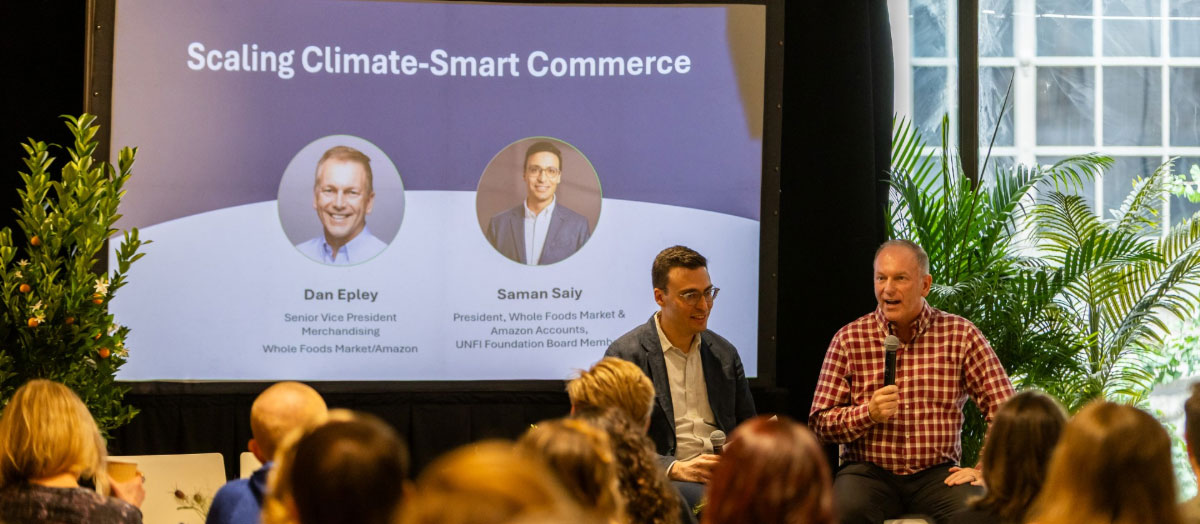
Providing a retailer perspective, Dan Epley, Senior Vice President of Merchandising at Whole Foods Market/Amazon, shared several factors that can help brands grow in the marketplace:
Transparency about where products come from and how they are produced
Credible certifications that help retailers and shoppers quickly understand product attributes and build trust
Clear storytelling that connects sourcing practices and climate benefits to shopper values
Reinforcing this point, Jason Stein, Director of Category Management at National Co+op Grocers stated, “sustainability messaging is most effective when it is authentic, easy for consumers to understand, and aligned with demonstrated consumer demand.”
This year's discussions highlighted a common theme.
"Climate action is most effective when we come together to share ideas, learn from one another, and turn ambition into action,” says Alisha Real, Vice President, Sustainability & Impact. “Through our Climate Summit, we're helping suppliers, customers, and partners identify practical opportunities that support business growth while advancing a more resilient food system."